Wayflyer acquires Conjura to accelerate its AI product offering for small businesses (read more here)

eCommerce
Monday, February 2, 2026
Discover the best omnichannel eCommerce solutions for 2026, from marketplaces and shipping to ERP, integrations, analytics, and growth financing.
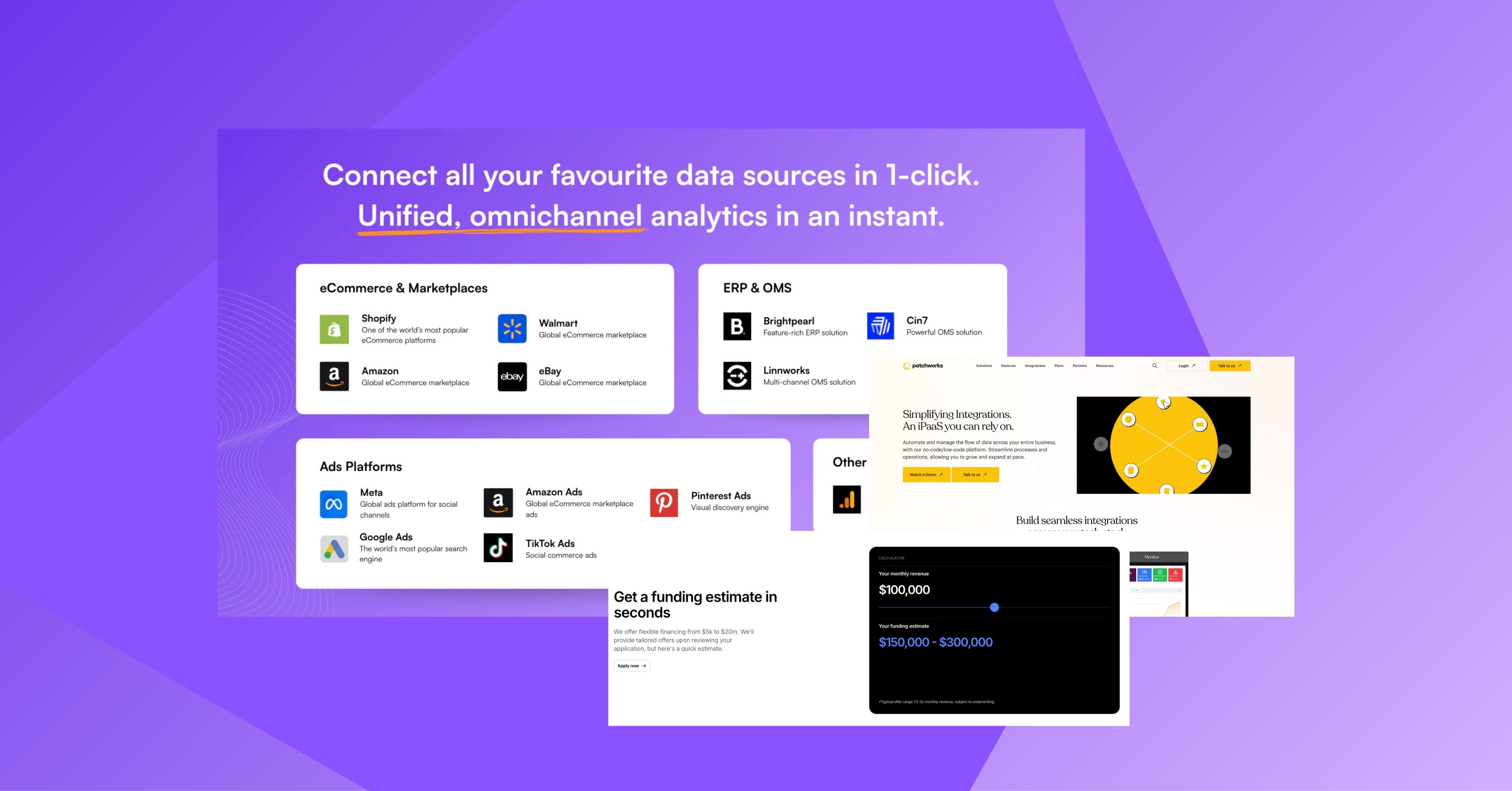
In 2026, most growing brands sell across a mix of direct-to-consumer storefronts, online marketplaces, paid media channels, and increasingly, multiple international markets. Customers expect a seamless experience across all of them. Operations teams expect systems to stay in sync. Finance teams expect growth to actually be profitable.
The reality? Many brands are operating with fragmented tools, brittle integrations, and limited visibility into what’s really working. The tech that sits behind your omnichannel empire can make or break your business, something that shouldn't be overlooked.
The best omnichannel eCommerce solutions in 2026 don’t promise to do everything in one platform. Instead, they focus on doing one job exceptionally well and integrating cleanly with the rest of your stack.
In this guide, we’ll break down the six best omnichannel eCommerce solutions for modern brands, covering integration, commerce, marketplaces, shipping, and analytics, plus an honorary mention for financing expansion. Together, these tools form a scalable, profit-focused omnichannel stack built for 2026 and beyond.
Before jumping into the tools themselves, it’s worth clarifying what actually makes an omnichannel solution good in 2026. The bar has moved significantly over the last few years. Today’s leading ecommerce omnichannel solutions share a few common traits.
Selling on more channels should increase revenue, not internal complexity. The best tools help brands expand across DTC, marketplaces, and regions without duplicating effort or introducing data inconsistencies.
Omnichannel eCommerce lives or dies by integration quality. Whether it’s orders, inventory, costs, or customer data, information needs to flow accurately between systems like eCommerce platforms, ERPs, shipping tools, and analytics platforms.
High-growth brands quickly outgrow manual processes. Modern omnichannel eCommerce platforms support:
All without slowing teams down.
Revenue alone doesn’t tell the full story, especially across marketplaces with fees, ads, returns, and fulfillment costs. The best omnichannel solutions help brands understand what’s actually profitable, not just what’s selling.
Finally, data is only useful if it drives decisions. Leading omnichannel analytics and operations tools surface insights that help teams decide:
With that framework in mind, let’s look at the first two omnichannel eCommerce solutions every serious brand should consider in 2026.
Best for Omnichannel Analytics & Profitability Insights
Once you’re selling across multiple channels, marketplaces, and regions, one question becomes critical:
Where are we actually making money?
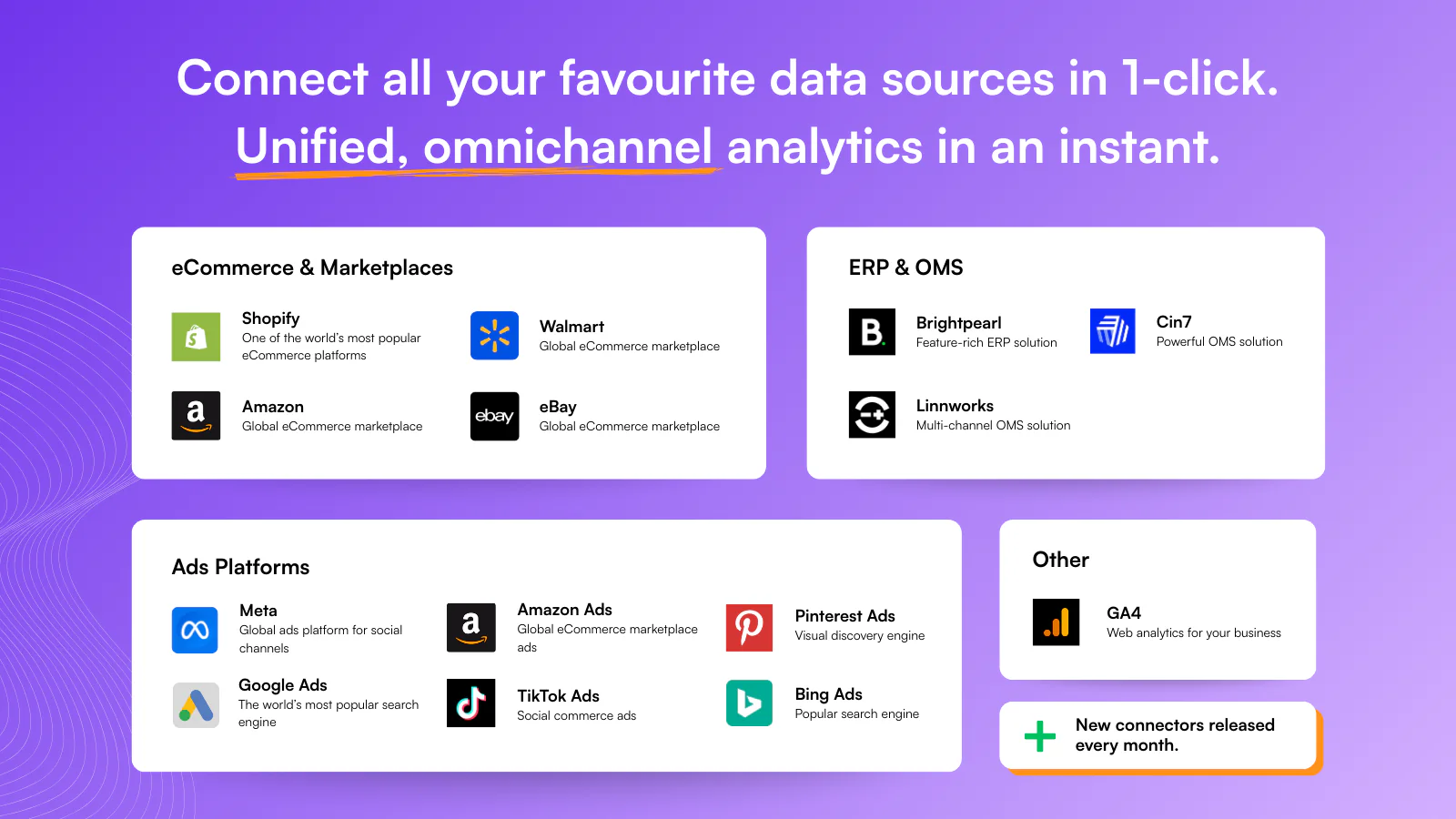
That’s the gap Conjura fills and why it earns its place among the best omnichannel eCommerce solutions in 2026.
Conjura brings together eCommerce, marketplace, and marketing data to give brands a single, profit-focused view of performance. Rather than stopping at revenue or ROAS, Conjura shows how products, channels, and campaigns contribute to real profitability.
What sets Conjura apart:
In a true eCommerce omnichannel environment, growth decisions are expensive. Scaling the wrong products, channels, or markets can destroy margin quickly. Conjura helps brands avoid that by showing exactly where profit is created and where it isn’t.
Best for: Brands that want to scale omnichannel eCommerce profitably, not just grow topline revenue.
Best Omnichannel Commerce Foundation
Every omnichannel stack needs a reliable transactional core, and for many modern brands, that core is Shopify Plus.
While Shopify Plus isn’t a complete omnichannel eCommerce solution on its own, it plays a critical role as the commerce engine powering DTC, B2B, and increasingly, global storefronts.
Its real strength lies in flexibility: Shopify Plus is designed to integrate with best-in-class tools across fulfillment, marketplaces, analytics, and integration platforms like Patchworks.
Why Shopify Plus remains a cornerstone in 2026:
That said, Shopify Plus works best as part of a broader eCommerce omnichannel stack. Brands relying on it alone often struggle with:
Used correctly, Shopify Plus provides a strong, stable foundation that other omnichannel eCommerce solutions can build on top of.
Best for: Brands looking for a scalable, flexible commerce platform that integrates seamlessly into a wider omnichannel ecosystem.
Best for Marketplace Listing & Inventory Management
Marketplaces are no longer a secondary growth lever. For many brands in 2026, Amazon and other eCommerce marketplaces represent a significant, and sometimes dominant, share of revenue. That’s where Linnworks fits into the omnichannel eCommerce stack. It provides a centralized way to manage marketplace listings, inventory, and orders without creating operational chaos behind the scenes.
What Linnworks does well:
As brands expand into additional marketplaces and regions, manual listing management becomes unworkable. Linnworks removes much of that complexity, allowing teams to scale marketplace revenue without scaling headcount at the same pace.
Best for: Brands with meaningful marketplace revenue who need reliable listing, inventory, and order management across multiple platforms.
Best for Omnichannel Shipping & Fulfilment Operations
Shipping is one of the most underestimated challenges in omnichannel ecommerce. As brands add sales channels, shipping workflows often become fragmented, manual, and expensive.
ShipStation solves this by acting as a centralized hub for omnichannel shipping operations, sitting between your order sources and your carriers.
What ShipStation excels at:
In 2026, fast, accurate shipping isn’t just a customer experience issue, it’s a profitability issue. Late deliveries, incorrect labels, and inefficient carrier selection all eat directly into margin. ShipStation helps brands maintain operational control as order volumes and channel complexity increase.
Best for: Brands handling high order volumes across multiple channels that need scalable, efficient shipping operations.
Best Omnichannel Integration Platform (iPaaS)
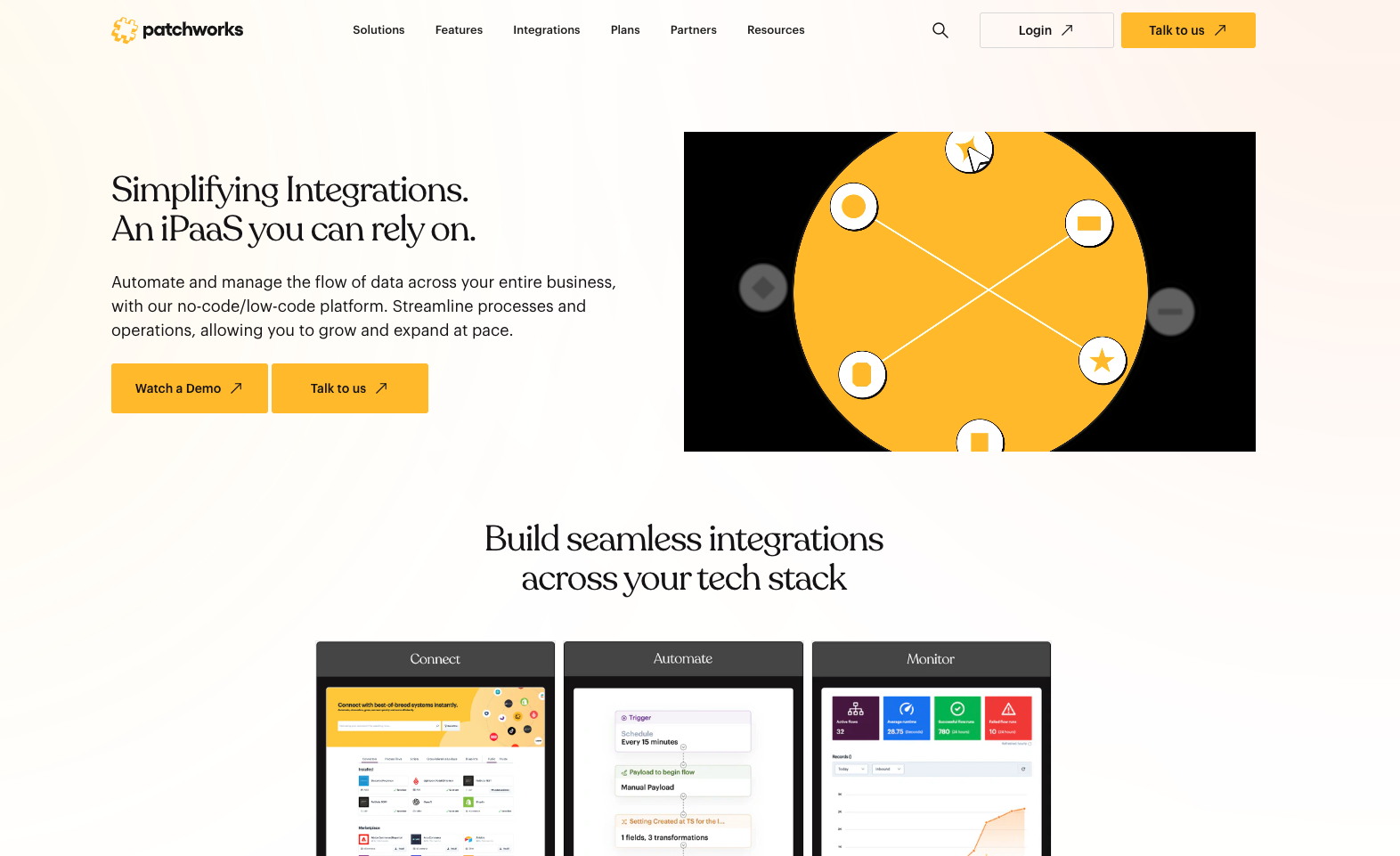
If omnichannel eCommerce were a building, integration would be the foundation and Patchworks is one of the strongest foundations available for complex eCommerce businesses.
As brands expand into new channels and markets, point-to-point integrations quickly become brittle and unmanageable. Patchworks solves this by acting as a dedicated integration-platform-as-a-service (iPaaS) built specifically for eCommerce.
Rather than forcing brands into rigid workflows, Patchworks connects the tools you already use cleanly, reliably, and at scale.
Where Patchworks excels:
In 2026, eCommerce stacks are more modular than ever. Patchworks enables that modularity without sacrificing data quality or operational control.
Best for: Mid-market and enterprise brands with complex tech stacks selling across multiple markets, channels, and systems.
Best ERP for Omnichannel Retail Operations
As omnichannel eCommerce matures, spreadsheets and lightweight back-office tools stop being enough. Once brands are selling across multiple channels, regions, and warehouses, an ERP becomes essential, not optional.
That’s where Brightpearl fits into the omnichannel eCommerce stack.
Brightpearl is a retail-focused ERP designed specifically for brands operating across eCommerce, marketplaces, wholesale, and physical retail. Rather than being a generic enterprise system, it’s built around the realities of high-volume, fast-moving omnichannel businesses.
What Brightpearl does best:
In an omnichannel environment, ERPs play a critical but often invisible role. Brightpearl ensures that when orders flow in from Shopify, marketplaces, or POS systems, inventory, costs, and financials stay accurate behind the scenes. When paired with tools like Patchworks for integration and Conjura for analytics, Brightpearl becomes a powerful operational backbone, handling the “how” while other platforms focus on growth and decision-making.
Best for: Mid-market and enterprise retail brands that need a robust ERP to manage inventory, orders, and financial operations across multiple channels and markets.
Powering Omnichannel Expansion with Capital
Even the most well-designed omnichannel stack hits a ceiling without sufficient cash flow. Inventory buys, new marketplace launches, and international expansion all require upfront investment. That’s why Wayflyer deserves an honorable mention alongside the core omnichannel eCommerce solutions.
Wayflyer provides flexible financing designed specifically for eCommerce brands, enabling them to:
In practice, Wayflyer often complements platforms like Conjura. Insights highlight where to invest, and financing makes it possible to act on those insights at speed.

No single omnichannel eCommerce platform does everything and that’s not a weakness. The most successful brands in 2026 build intentional stacks, choosing best-in-class tools for each core function.
A modern omnichannel stack might look like this:
Together, these tools cover selling, integrating, fulfilling, analyzing, and financing omnichannel growth, without forcing brands into a one-size-fits-all platform.
Omnichannel eCommerce is only getting more complex, but complexity doesn’t have to mean chaos.
The brands winning in 2026 aren’t those with the most tools. They’re the ones with:
The best omnichannel eCommerce solutions work together to turn fragmented data and operations into confident decisions. And platforms like Conjura ensure that growth across channels actually translates into sustainable profit. If omnichannel is your future, clarity is your competitive advantage.
Discover the latest eCommerce guides, articles and tips to help your brand grow.
Book A Demo
Book a demo with one of our team to discover the power of Conjura and how it can transform your business.
Revenue Increase
"I’m a big fan of Conjura and there’s so much more for us to keep getting from it.”
Kayla Wilson, Marketing Director @ Furniturebox

Explore the
Platform


plans
Get Started
plans
plans



Explore
Conjura


Unlock eCommerce performance data and gain insights that drive profit.
