Wayflyer acquires Conjura to accelerate its AI product offering for small businesses (read more here)

eCommerce
Tuesday, January 27, 2026
WooCommerce reporting only goes so far. Learn how advanced WooCommerce analytics help you track profit, marketing performance, and scale smarter.
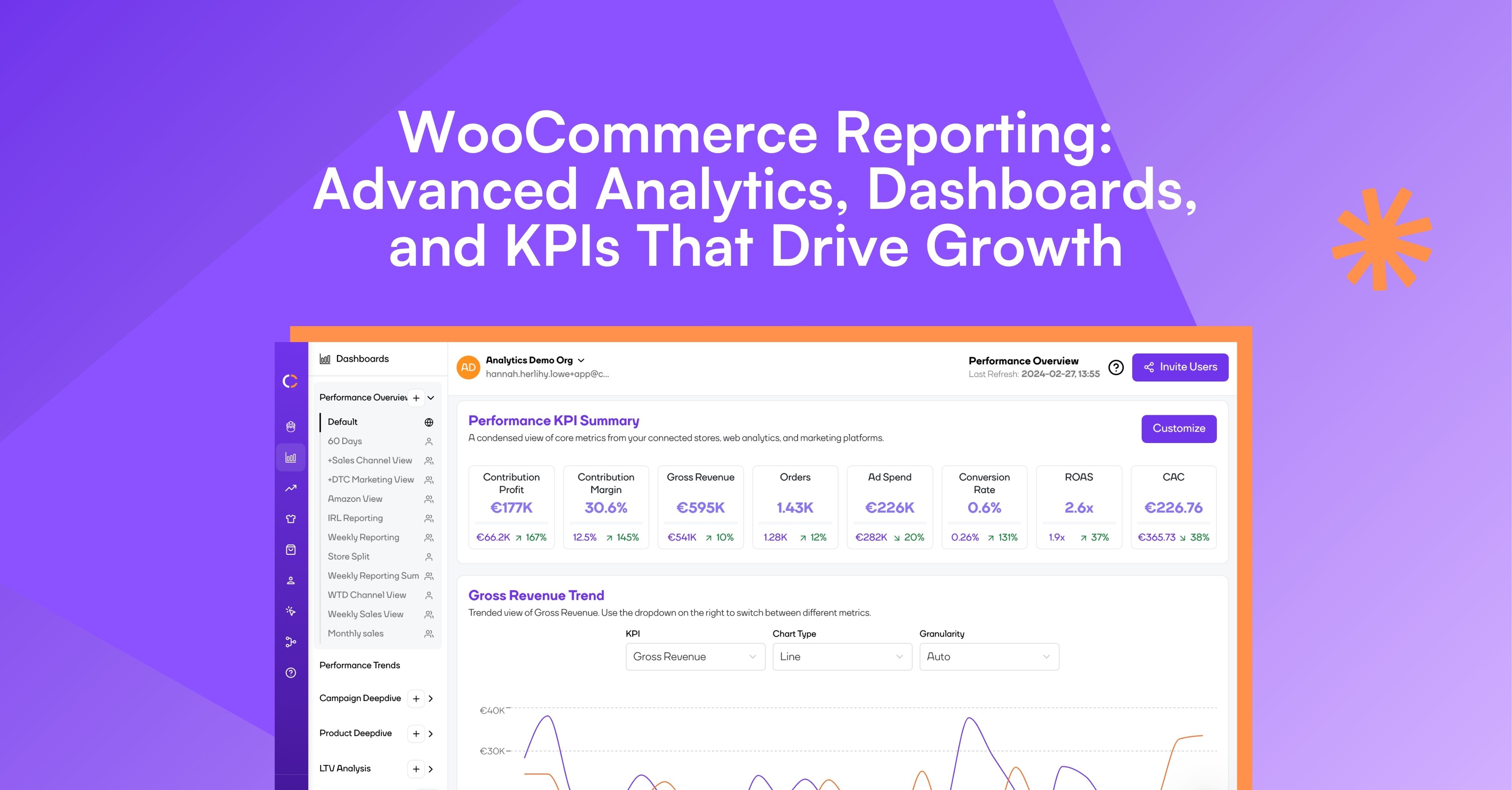
Running a WooCommerce store today is easier than ever. Scaling one profitably? That’s a whole different story.
As WooCommerce brands grow, so does the complexity of their data. Orders increase. Marketing spend ramps up. Product catalogs expand. Suddenly, the simple out-of-the-box reports that once felt “good enough” start leaving uncomfortable questions unanswered…
This is where WooCommerce reporting becomes either a growth lever or a growth blocker.
In this article, we’ll explore what WooCommerce reporting can (and can’t) do out of the box, why many brands hit a data ceiling as they scale, and how leveraging a more advanced analytics solution unlocks smarter, more profitable decision-making for WooCommerce businesses.
At its core, reporting exists to support better decisions. But too often, WooCommerce reporting ends up being something teams look at rather than something they take actions from. For early-stage stores, basic metrics like revenue, orders, and conversion rate are usually enough to keep things moving. You know what sold yesterday, which products are popular, and whether sales are trending up or down.
The problem is that growth amplifies inefficiency.
As soon as you start investing seriously in paid media, expanding your SKU count, or operating multiple WooCommerce stores, surface-level metrics stop telling the full story. Revenue can increase while profit declines. Best-selling products can quietly lose money. Marketing channels can look “successful” while delivering poor-quality customers. Modern WooCommerce brands don’t fail because they lack data. They struggle because they lack clarity.
WooCommerce’s native analytics are a solid starting point, especially for merchants early in their journey.
Out of the box, WooCommerce provides access to core reports covering:
These reports live inside a standard WooCommerce dashboard and can be filtered by date range, product, or category. For many merchants, this setup forms the foundation of their regular performance reviews.
There are also common WooCommerce report templates that teams lean on heavily, such as:
For basic operational monitoring, this works well. You can quickly answer questions like “How much did we sell last week?” or “Which products are selling the most units?” But WooCommerce’s reporting model is designed to explain what happened, not why it happened and definitely not what to do next.
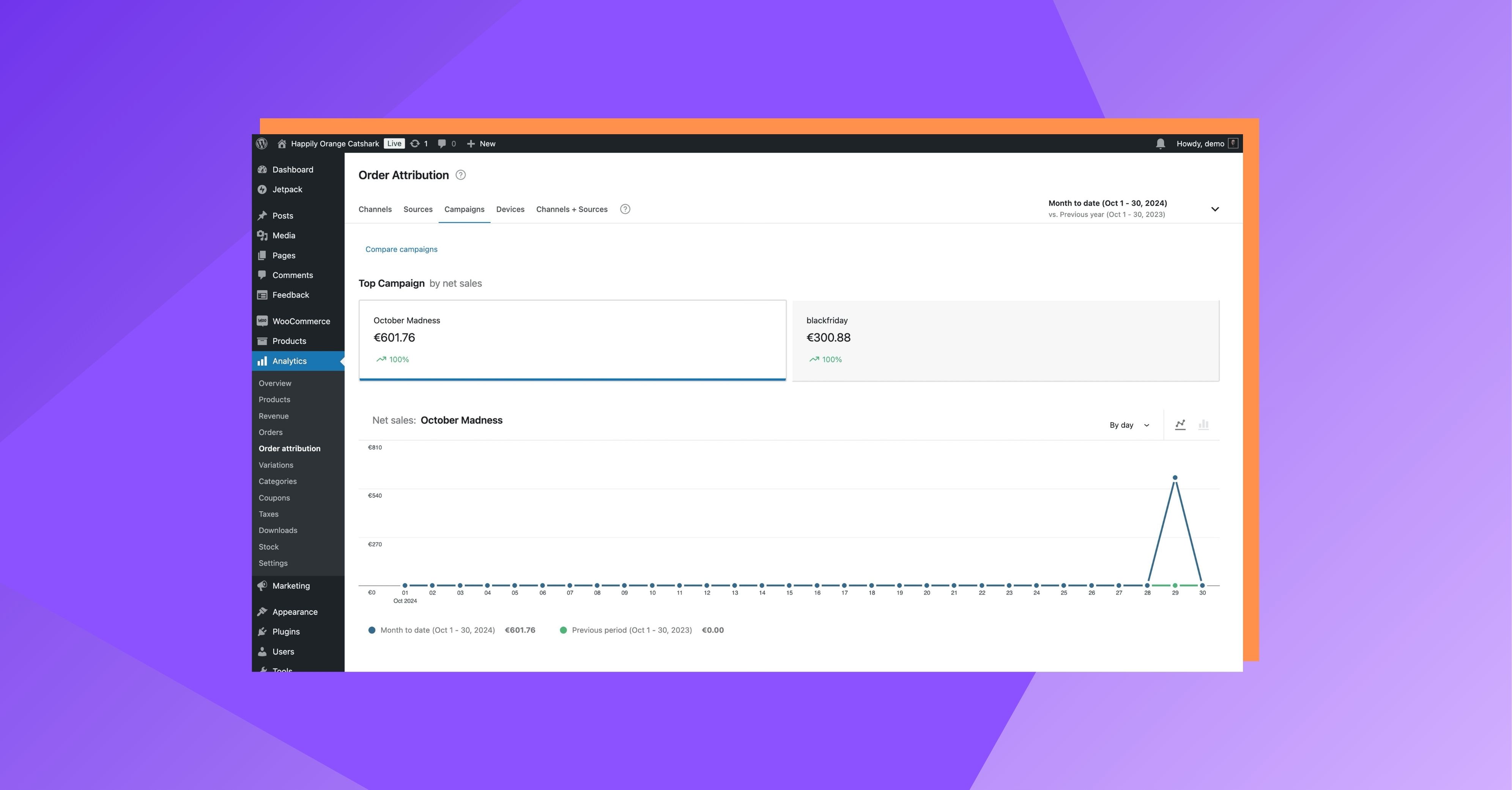
As soon as a WooCommerce brand starts scaling, cracks begin to show in native reporting. The biggest issue isn’t missing data, it’s missing context.
WooCommerce reports are largely revenue-focused. You can see how much a product sold, but not how much money it actually made your business once costs are factored in.
Key gaps include:
This leads to a dangerous situation where high-revenue products are mistaken for high-performing products, even when margins are razor-thin or negative.
WooCommerce doesn’t natively connect marketing spend to product performance.
That means your most important growth questions live across multiple tools:
Trying to reconcile these manually often results in spreadsheets, guesswork, and innaccurate decisions. You might know how much you spent on ads, but not which products that spend actually funneled into.
The moment you introduce:
…reporting complexity increases dramatically.
Many brands attempt to solve this by exporting data into spreadsheets to create “consolidated reporting.” This approach works, until it doesn’t. It’s slow, error-prone, and impossible to maintain in real time. This is where many WooCommerce teams realize they don’t need more reports. They need a better analytics solution.
Advanced WooCommerce reporting isn’t about prettier dashboards or more charts. It’s about shifting from descriptive metrics to decision-grade insight.
At a practical level, advanced reporting answers questions like:
To do this, an advanced WooCommerce analytics tool needs to unify data that traditionally lives in silos:
When these data sources come together, reporting stops being reactive and starts becoming strategic. This is the difference between looking at yesterday’s numbers and confidently planning next quarter’s growth.
Conjura is built around a simple idea: eCommerce growth should be measured by profit, not just revenue.
With the launch of Conjura’s WooCommerce connector, WooCommerce brands can now instantly plug their store data directly into a platform designed to answer the questions native reporting can’t. Rather than replacing WooCommerce analytics, Conjura sits on top of it, enriching your store data with marketing, customer, and cost insights to deliver a single, profit-focused view of performance.
Once connected, Conjura automatically pulls together:
Marketing is where WooCommerce reporting most commonly falls apart.
WooCommerce knows what sold. Ad platforms know what you spent. But without advanced analytics, connecting those two worlds is largely manual and often inaccurate.
Conjura bridges this gap by tying marketing spend directly to products, not just orders or channels. That means brands can finally understand:
This matters because not all growth is good growth. A campaign can drive impressive revenue while quietly destroying contribution margin. With advanced WooCommerce reporting, marketing decisions become grounded in profit, not optimism.
WooCommerce reporting tends to treat all customers the same. Advanced analytics do not.
Understanding who is buying is just as important as understanding what they’re buying. Conjura adds customer-level intelligence that helps WooCommerce brands see beyond the first transaction.
This includes:
When customer data is connected back to products and marketing, powerful patterns emerge. Brands can identify which SKUs acquire high-value customers, which channels drive repeat purchases, and where retention efforts will have the biggest impact.
Instead of optimizing for short-term sales, teams can optimize for long-term profitability.
For brands running multiple WooCommerce stores, reporting complexity increases exponentially. Different currencies, regions, product catalogs, and marketing strategies often result in fragmented reporting and disconnected decision-making. Consolidated reporting usually means spreadsheets, manual exports, and delayed insight.
Conjura simplifies this by acting as a multi-store WooCommerce integration platform with consolidated reporting built in.
From a single dashboard, teams can:
This unified view allows leadership teams to make faster, more confident decisions — without waiting for monthly reports or manual analysis.
Not every WooCommerce store needs advanced analytics on day one. But for growing brands, the need becomes unavoidable.
Advanced WooCommerce reporting is best suited for:
If decisions around pricing, budget, or inventory rely on gut feel or delayed spreadsheets, advanced analytics quickly pay for themselves.
Discover the latest eCommerce guides, articles and tips to help your brand grow.
Book A Demo
Book a demo with one of our team to discover the power of Conjura and how it can transform your business.
Revenue Increase
"I’m a big fan of Conjura and there’s so much more for us to keep getting from it.”
Kayla Wilson, Marketing Director @ Furniturebox

Explore the
Platform


plans
Get Started
plans
plans



Explore
Conjura


Unlock eCommerce performance data and gain insights that drive profit.
