Wayflyer acquires Conjura to accelerate its AI product offering for small businesses (read more here)

AI Commerce
Tuesday, January 20, 2026
Discover how AI Commerce is changing eCommerce. Learn how to sell on AI platforms like ChatGPT, optimize with Shopify’s UCP, and drive profitable growth with AI-powered insights.
For the last few years, eCommerce growth followed a fairly predictable formula: search engines helped shoppers find products, social media helped brands influence demand, and marketplaces helped customers compare options at scale. However, the recent shift in how users interact with AI platforms is changing this.
Instead of scrolling through results, shoppers are now asking AI tools questions like “What’s the best cordless lamp for outdoor dining?” or “Which skincare brand is best for sensitive skin under $50?”. AI doesn’t just show options - it decides what to recommend.
This is the rise of AI Commerce or Agentic Commerce: a world where AI agents act as the intermediary between brands and buyers. They discover products, evaluate them, and increasingly, complete purchases on the shopper’s behalf. For eCommerce brands, this creates a new reality: If AI agents can’t understand your products, you don’t exist.
In this article, we’ll break down why selling on AI platforms matters, how Shopify’s Universal Commerce Protocol (UCP) enables it, and how brands should start optimizing today in preparation for AI shopping becoming a major sales channel.
AI platforms aren’t just another random traffic source. They represent a fundamental shift in how buying decisions are made.
Traditional search forces shoppers to do the heavy lifting themselves, requiring them to read through multiple listings, compare specs across products, filter and interpret reviews, and jump between tabs before they can make a confident decision. AI flips that model. Shoppers ask a question, and AI delivers a curated answer.
That matters because AI-generated recommendations usually surface only a handful of products, not pages of results like traditional search. If your products aren’t selected by AI, there’s no second page to fall back on.
From a merchant perspective, this means:
AI agents don’t behave like humans. They don’t impulse click, get distracted, or scroll endlessly. Instead, they evaluate products based on signals such as:
In other words, AI agents behave like hyper-rational buyers.
That’s great news for strong products and bad news for brands relying on vague descriptions, weak categorization, or inflated claims.
AI systems learn and adapt over time, and products that consistently perform well (converting efficiently and delivering strong customer outcomes) become safer, more trusted recommendations for AI models.
This creates a powerful compounding effect: strong products are recommended more often, increased recommendations drive higher sales volume, and those additional sales further reinforce the AI’s confidence in recommending the product again.
AI-referred shoppers tend to:
Why? Because the decision-making has already happened before the shopper reaches your store.
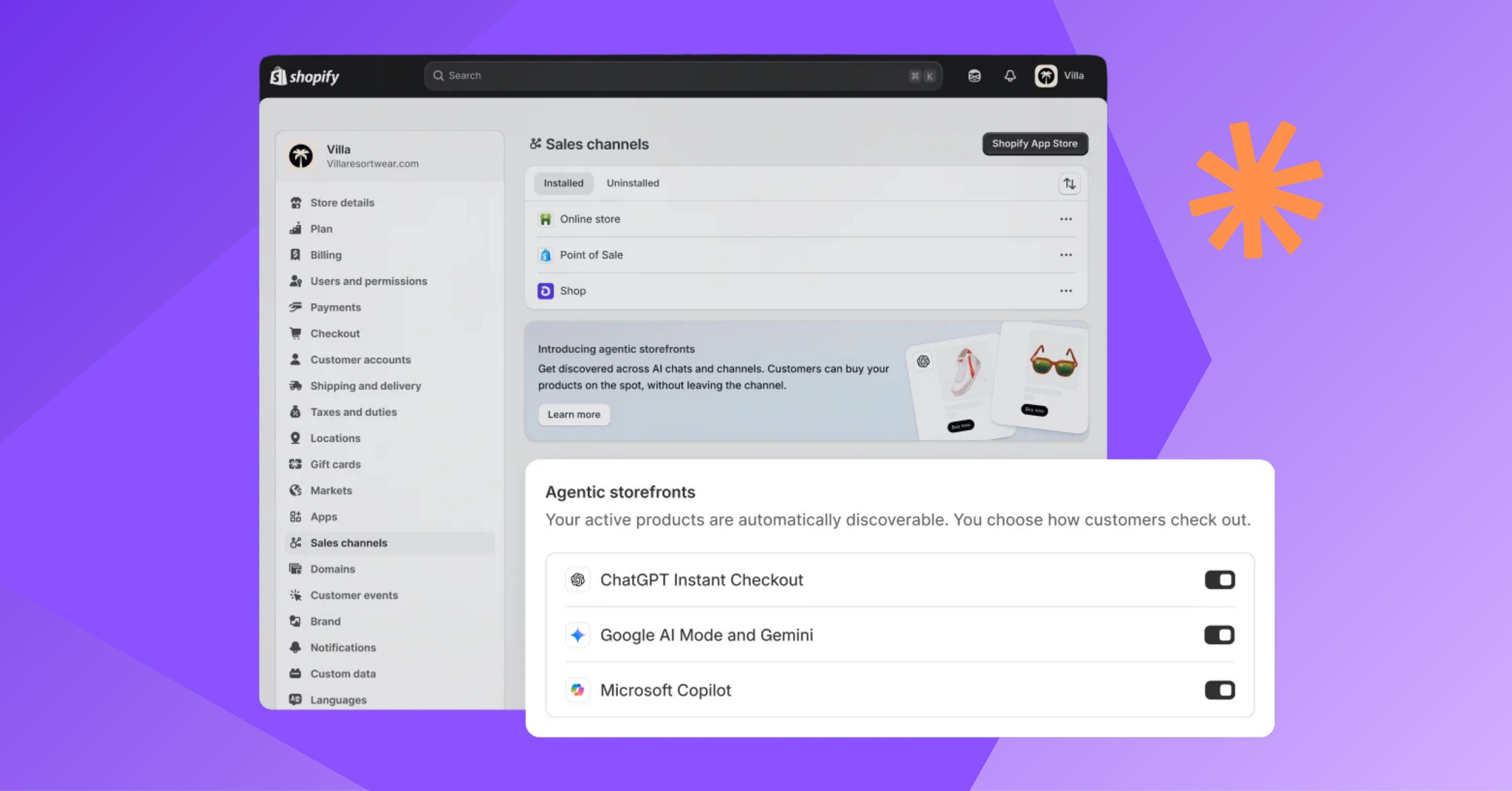
To make AI Commerce possible at scale, commerce platforms need to speak the same language as AI systems. That’s exactly what Shopify is doing with its Universal Commerce Protocol (UCP).
UCP is Shopify’s framework for making commerce machine-readable.
It standardizes how:
are exposed to external systems, including AI agents. Instead of scraping websites or relying on inconsistent feeds, AI platforms can directly understand:
For merchants using Shopify, this is a foundational shift. Your store is no longer just a website, it’s an endpoint AI agents can interact with. Unlocking a whole host of new and valuable sales channels such as ChatGPT, Gemini, Claude etc.
Historically, eCommerce sites were designed for humans with the focus on visual layouts, marketing copy and emotional storytelling.
AI agents don’t care about any of that unless it’s structured and explicit.
UCP bridges that gap by enabling AI platforms to reliably interpret product catalogs, validate inventory in real time and trigger secure checkout flows.
UCP makes AI Commerce possible, but it doesn’t make it fair or automatic. AI agents still actively decide which products to recommend, and those decisions are driven by clear signals: how complete and structured your product data is, how relevant your products are to the user’s query, and how well those products perform once recommended.
Messy catalogs, unclear attributes, and poor conversion rates don’t magically improve just because UCP exists, they simply become easier for AI systems to ignore. Which brings us to the most important question: how do you actually optimize your business to succeed and sell profitably on AI platforms?
AI agents don’t “browse” your site. They parse your data.
If your product information is incomplete, inconsistent, or vague, AI agents can’t confidently recommend your products, even if they sell well through other channels.
At a minimum, every SKU should have:
For example, AI systems struggle with titles that are poetic but unclear. Compare:
vs.
The second tells an AI agent exactly when to recommend it.
Rule of thumb: If your product data wouldn’t make sense to someone seeing it out of context, it won’t make sense to an AI model either.
AI Commerce is driven by questions, not keywords.
Instead of optimizing solely for search terms like “bamboo lamp,” merchants need to think in natural language:
Your product descriptions should naturally answer those questions.
Practical ways to do this:
This helps AI agents confidently match your product to real buyer intent.
AI agents don’t just read your product data, they judge outcomes.
When an AI platform recommends a product, it’s implicitly putting its reputation on the line. If users consistently buy a product and return it, complain about it, or abandon checkout, the AI platform learns quickly.
That’s why performance signals are becoming one of the strongest inputs into AI-driven commerce decisions.
Key signals AI agents care about include:
In practice, this means AI platforms tend to favor products that convert efficiently once they’re viewed, have low refund rates because expectations are set clearly and quality is consistent, and remain reliably in stock. These signals tell AI agents that a product is a safe, trustworthy recommendation that delivers a good experience for shoppers.
For merchants, this creates an important strategic shift. Rather than trying to push every SKU equally, brands need to become far more selective and intentional. The focus should be on identifying the strongest-performing products in the catalog, actively optimizing those SKUs for AI visibility and recommendation, and fixing, deprioritizing, or even removing products that consistently underperform and drag down overall performance signals.
Images are no longer just about inspiring human shoppers. AI platforms such as ChatGPT and Google AI actively analyze images to understand products.
That means poor imagery doesn’t just hurt conversion rates; it hurts discoverability.
AI vision models look for:
Best practices for AI-friendly product imagery include:
If an AI agent can’t visually distinguish your product from similar alternatives, it’s less likely to recommend it, even if your text descriptions are strong.
One of the biggest mistakes brands will make with AI Commerce is treating it like “free traffic.” It isn’t.
AI platforms are performance-driven recommendation engines. They constantly evaluate which products deliver the best outcomes for users and adjust accordingly.
That means merchants need to manage AI platforms the same way they manage paid media:
This is especially important because AI recommendations tend to concentrate demand. A small number of products will receive a disproportionate share of visibility.
Brands that proactively steer AI-driven demand toward:
AI Commerce introduces a new challenge: visibility without profitability is useless.
Just because an AI agent recommends your product doesn’t mean it’s good for your business. High returns, low margins, or heavy ad dependency can quietly erode profit, even as sales rise. This is where Conjura plays a critical role.
Most analytics tools are built around surface-level metrics like revenue, ROAS, and traffic, but AI platforms don’t optimize for those numbers and neither should you. In AI Commerce, what actually determines success is true SKU-level profitability, strong product-level performance signals, and what happens after the click, including conversion quality and customer outcomes.
Without that level of clarity, brands risk scaling visibility for the wrong products, driving growth that looks good on paper but quietly erodes profit.
Conjura brings all your commerce, marketing, and marketplace data together to show:
This gives merchants the clarity to identify which products are genuinely well suited for AI recommendations, avoid scaling high-risk or low-margin SKUs that can undermine profitability, and optimize their catalogs around sustainable profit rather than visibility alone.

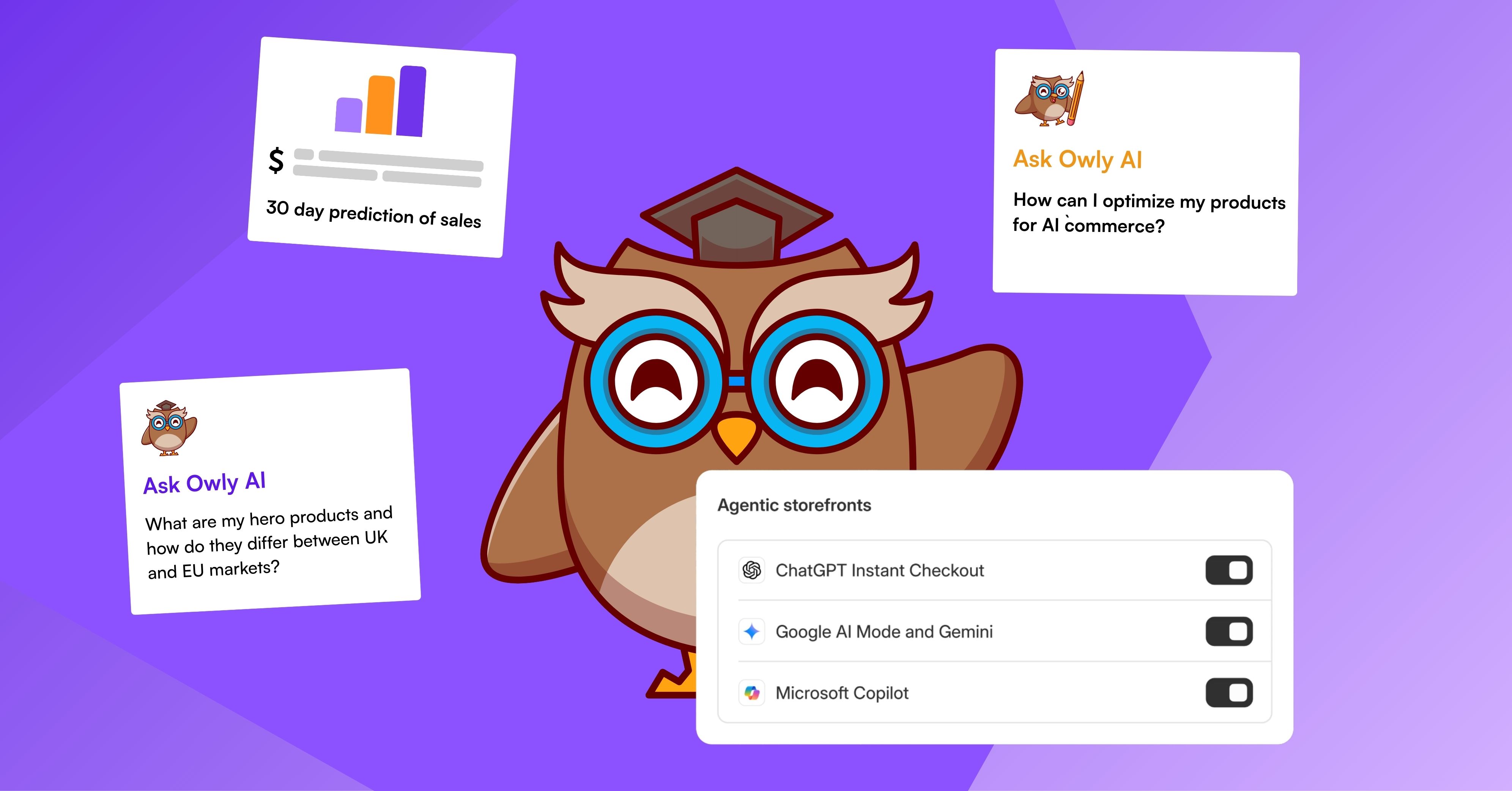
Owly AI acts like an analytics co-pilot for Conjura. Instead of digging through dashboards, teams can ask:
Owly analyzes thousands of underlying data points and translates them into clear, actionable recommendations, helping teams move faster without sacrificing rigor.
In a world where AI agents are making buying decisions, Owly helps you make better ones.
AI platforms are rapidly becoming a front door into your eCommerce catalogue.
Shoppers are asking fewer questions of search engines and more questions of AI agents. Those agents are deciding what to recommend, what to ignore, and increasingly, what to buy.
Shopify’s Universal Commerce Protocol makes participation possible, but optimization determines visibility, and profitability determines success.
The brands that win in AI Commerce are the ones that invest early in clean, structured product data, optimize relentlessly around real performance signals rather than vanity metrics, treat AI platforms as serious, measurable revenue channels, and use profit-first analytics to guide every decision they make as AI-driven demand scales.
Discover the latest eCommerce guides, articles and tips to help your brand grow.
Book A Demo
Book a demo with one of our team to discover the power of Conjura and how it can transform your business.
Revenue Increase
"I’m a big fan of Conjura and there’s so much more for us to keep getting from it.”
Kayla Wilson, Marketing Director @ Furniturebox

Explore the
Platform


plans
Get Started
plans
plans



Explore
Conjura


Unlock eCommerce performance data and gain insights that drive profit.
