Wayflyer acquires Conjura to accelerate its AI product offering for small businesses (read more here)

Marketplaces
Tuesday, January 6, 2026
Looking for the best Amazon analytics tools in 2026? Compare Amazon seller analytics tools, Amazon ads analytics, and Amazon vs Walmart performance.

Selling on Amazon in 2026 isn’t as simple as finding winning products and turning ads on. It’s about understanding profitability at a SKU level, navigating rising ad costs, managing complex Amazon fees, and making smarter decisions across multiple marketplaces.
For modern omnichannel brands, Amazon is just one part of a much larger ecosystem that includes DTC sites, paid media, social and marketplaces. Yet most Amazon sellers still rely on fragmented reporting, spreadsheets, or native Amazon dashboards that tell you what happened, not why it happened or what to do next.
That’s where Amazon analytics tools come in.
In this guide, we’ll break down:
If you sell on Amazon in addition to other channels then this guide is for you.
An Amazon analytics tool is a platform that pulls together your Amazon sales, advertising, and operational data to help you understand performance beyond surface-level metrics like revenue or ROAS.
Amazon Seller Central and Amazon Ads provide plenty of reports, but they’re:
Most importantly, native Amazon tools don’t answer the questions that actually matter in 2026:
This is why Amazon sellers are increasingly turning to third-party Amazon seller analytics tools, platforms designed to unify data, calculate real profitability, and surface actionable insights.
Different Amazon analytics tools will have their own strengths. As marketplaces mature and margins tighten, the best tools in 2026 share a few critical capabilities.
Revenue alone is misleading on Amazon. A best-in-class tool should calculate profit per SKU, accounting for:
If your tool can’t tell you which products actually make money, it’s not fit for modern Amazon selling.
Amazon Ads performance should be tied back to products, not just campaigns. Look for platforms that connect Sponsored Ads spend directly to SKUs so you can see which products scale profitably and which burn budget.
Most Amazon sellers now operate across:
The best Amazon analytics tools bring all channels into one view, allowing apples-to-apples comparisons of performance and profitability.
Dashboards are table stakes. In 2026, the best tools go further by providing:
If a platform requires a data analyst to operate, it slows decision-making. The best tools are fast to implement, intuitive to use, and designed for marketing, merchandising, finance, and operations teams alike.
Below are the top Amazon analytics platforms for eCommerce brands in 2026, starting with the clear market leader.
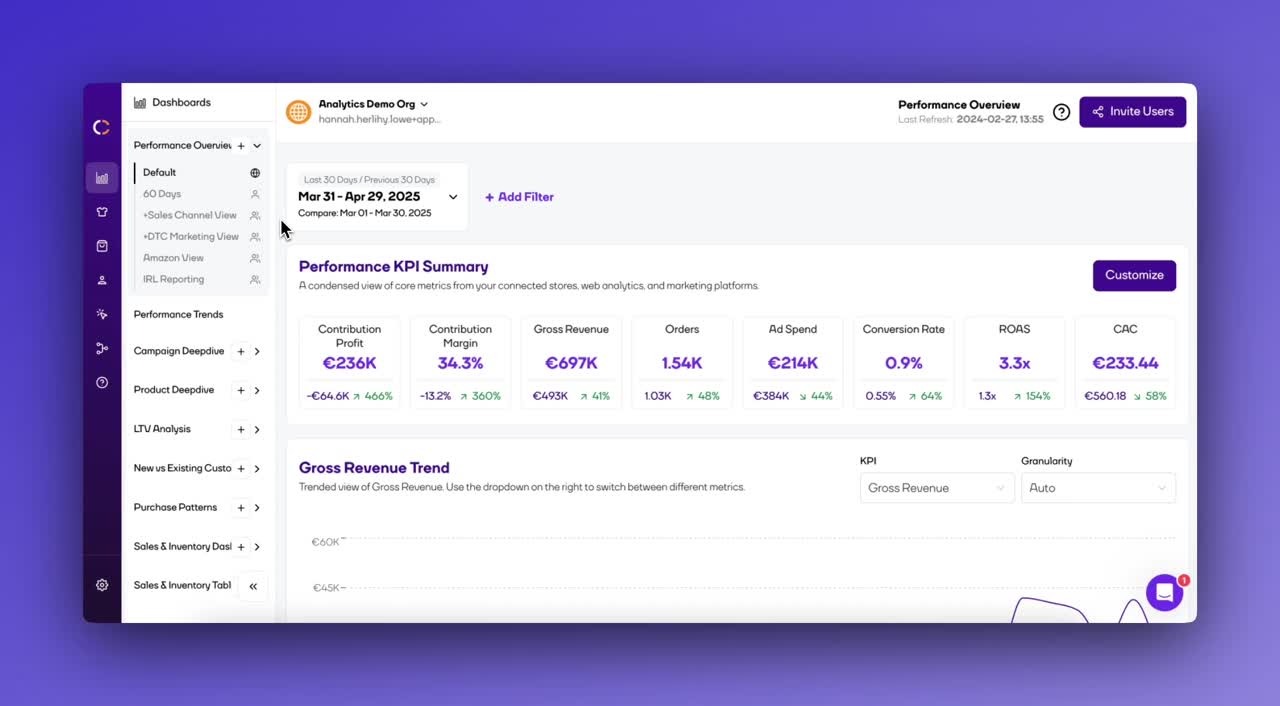
Conjura is the #1 Amazon analytics tool in 2026 for brands that care about profit, not vanity metrics.
Unlike traditional Amazon seller analytics tools that focus on surface-level reporting, Conjura is built around a single core principle: accurate product-level profitability across all your channels.
True SKU-Level Profitability
Conjura calculates contribution profit at the SKU level by combining:
This gives brands a clear, accurate view of which products drive profit and which silently drain margin.
Best-in-Class Amazon Ads Analytics
Conjura connects Amazon Ads directly to products, allowing sellers to understand:
Built for Omnichannel Brands
Amazon doesn’t exist in a vacuum and neither does Conjura. The platform unifies data from:
This allows teams to compare performance across channels and marketplaces in one place.
Actionable Product & Marketing Insights
Conjura doesn’t stop at reporting. Its product actions and AI-powered insights (via Owly AI) surface clear recommendations to:
Designed for Real Teams: Marketing, merchandising, finance, and operations teams all work from the same source of truth, without spreadsheets or manual reconciliation.
Best for: Scaling brands selling on Amazon and other channels that want a single platform for profitable growth.
Amazon’s native analytics tools are unavoidable, but limited.
Pros
Cons
Bottom line: Amazon’s tools are necessary, but they’re not sufficient for modern sellers focused on profit - hence why you’re probably reading this article in the first place!
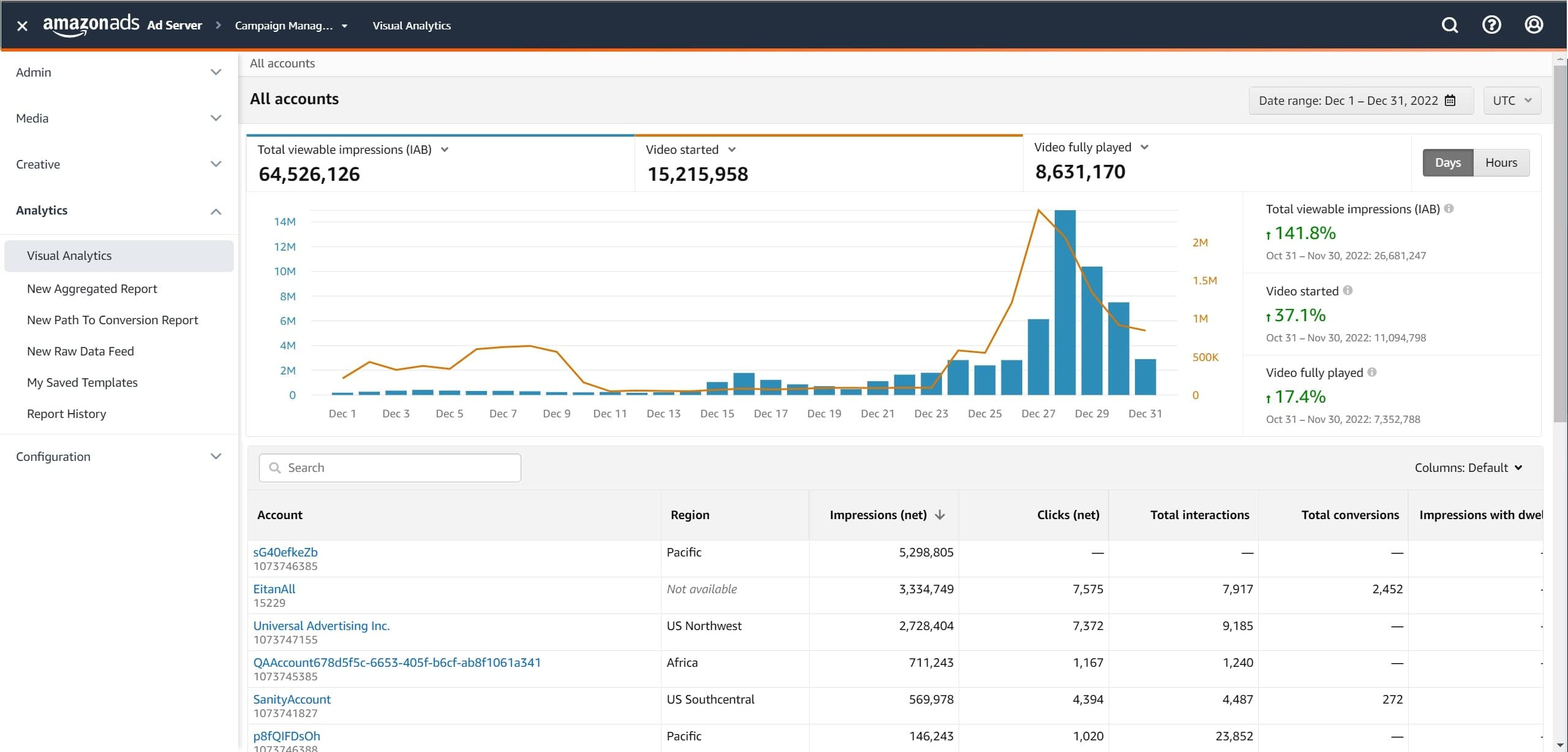
Triple Whale is a well-known analytics platform with a strong focus on marketing attribution.
Strengths
Limitations for Amazon Sellers
Best for: Brands primarily focused on paid media optimization rather than deep Amazon SKU analysis.
Polar Analytics positions itself as a highly customizable “all your data in one place” platform.
Strengths
Limitations
Best for: Teams with strong internal analytics resources that want flexibility over guidance.
One of the most common questions eCommerce brands ask today is: Should we double down on Amazon, or invest more in Walmart?
The real answer for most sellers in 2026 is both, but let’s break it down.
Amazon remains the dominant marketplace by volume and reach.
Pros
Cons
Amazon is still the fastest way to scale revenue, but without strong analytics, it’s also the fastest way to lose profit.
Walmart has quietly become one of the most attractive expansion channels for established Amazon sellers.
Pros
Cons
For many brands, Walmart offers higher-margin growth, especially when top Amazon SKUs are replicated successfully.
The hardest part of selling on both Amazon and Walmart isn’t getting products listed or ads live, it’s understanding how each marketplace is really performing. When sales, ads, fees, and inventory data live in separate systems, it becomes incredibly difficult to get a clear, side-by-side view of what’s actually driving profit.
As a result, sellers are often left struggling to answer fundamental questions. Which marketplace is delivering higher contribution profit? Are Walmart ads more efficient than Amazon Ads once fees and costs are factored in? Should inventory be prioritized for Amazon’s higher volume or Walmart’s potentially stronger margins? And which SKUs perform best on each marketplace?
Without unified analytics, these decisions are often based on assumptions rather than evidence. That’s why modern Amazon seller analytics tools must support multi-marketplace reporting, enabling teams to compare Amazon and Walmart performance using the same profitability metrics. When both marketplaces are measured consistently, brands can confidently allocate budget, inventory, and effort where it will have the greatest impact on profit.
There’s no shortage of Amazon analytics tools on the market. But most fall into one of two camps:
In 2026, winning Amazon sellers need more than either of those.
They need:
That’s why Conjura stands out as the best Amazon analytics tool for modern eCommerce brands. By unifying Amazon, DTC, paid media, and marketplace data into one platform and focusing relentlessly on profitability, Conjura helps brands make faster, smarter, and more profitable decisions. If you’re serious about scaling on Amazon (and beyond) in 2026, the right analytics platform isn’t optional; it’s foundational.
Book a demo with Conjura and see how product-level, omnichannel analytics changes the way you grow.
Discover the latest eCommerce guides, articles and tips to help your brand grow.
Book A Demo
Book a demo with one of our team to discover the power of Conjura and how it can transform your business.
Revenue Increase
"I’m a big fan of Conjura and there’s so much more for us to keep getting from it.”
Kayla Wilson, Marketing Director @ Furniturebox

Explore the
Platform


plans
Get Started
plans
plans



Explore
Conjura


Unlock eCommerce performance data and gain insights that drive profit.
