Wayflyer acquires Conjura to accelerate its AI product offering for small businesses (read more here)

eCommerce
Tuesday, December 16, 2025
Learn what product bundle pricing strategy is, how to bundle products in Shopify, and how to build a profitable product bundling strategy using Conjura data and Owly AI.
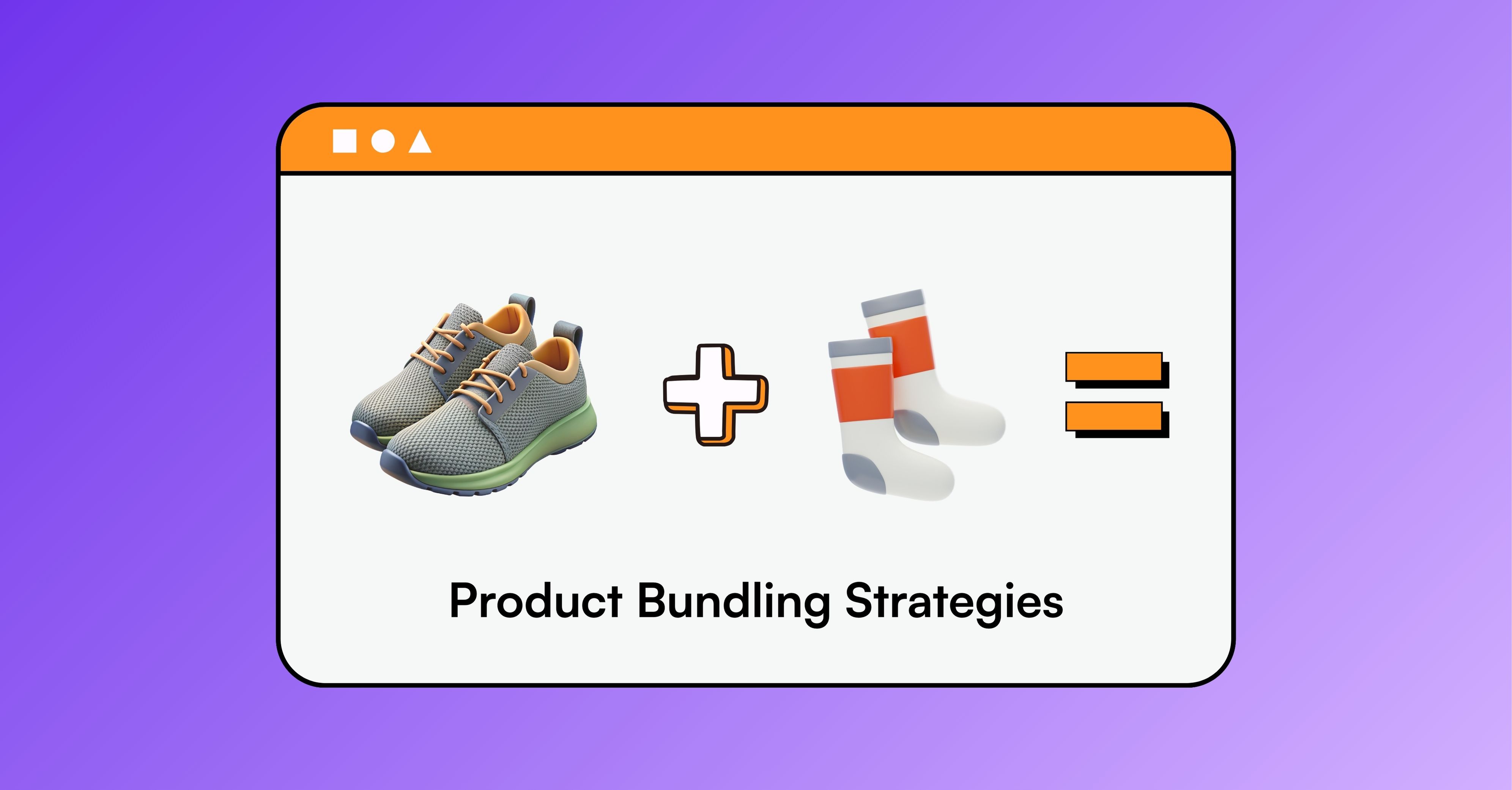
For many eCommerce brands, product bundles start as a quick win: group a few items together, add a small discount, and watch Average Order Value (AOV) tick up. And while that can work in the short term, bundles built on gut feel alone often come with a hidden cost - shrinking margins.
In today’s environment of rising acquisition costs, tighter competition, and more pressure on profitability, brands can’t afford to treat bundles as a purely tactical play. A strong product bundle pricing strategy isn’t about discounting more aggressively. It’s about using data to guide customers toward higher-value, higher-margin purchases, without sacrificing contribution profit.
Done right, bundles can:
Done wrong, they quietly erode profit while looking “successful” on the surface.
In this guide, we’ll break down what product bundle pricing really is, common mistakes brands make, and how to build a profitable product bundling strategy using data with a practical look at how tools like Conjura and Owly AI help brands move from guesswork to confident execution.
Before getting tactical, let’s level-set.
Product bundle pricing is the practice of selling multiple products together as a single offer, typically at a combined price that’s lower than buying each item individually. The goal is to increase perceived value while nudging customers to purchase more in a single transaction.
There are a few common bundle pricing models used in eCommerce:
From a customer psychology perspective, bundles work because they reduce decision fatigue, simplify comparisons, and increase perceived value. But from a business perspective, there’s a crucial distinction many brands miss:
Higher bundle revenue does not automatically mean higher bundle profit.
To build a sustainable product bundle pricing strategy, brands need to look beyond top-line revenue and understand how bundles impact costs, margins, and contribution profit at a SKU level.
When bundles are built intentionally, not just reactively, they become a powerful growth lever.
Here’s why a strong product bundling strategy works so well for eCommerce brands:
Bundles encourage customers to buy more items per order, increasing AOV without relying on site-wide sales or promo codes that compress margins across the board.
By pairing high-margin products with lower-margin or slower-moving SKUs, brands can “blend” margins, protecting overall contribution while increasing order value.
Bundles are an effective way to increase sell-through on overstocked or seasonal products without marking them down individually.
Well-designed bundles make shopping easier. Instead of forcing customers to figure out what goes together, you do the work for them, which often leads to higher conversion rates.
Bundles can be positioned as compelling first-purchase offers, improving conversion while maintaining profitability, especially when backed by data on contribution profit and lifetime value.
The catch? None of this works reliably without understanding which products are actually profitable, and which just look good in revenue reports.
If bundles are such a powerful tool, why do so many brands struggle to make them profitable?
It usually comes down to a handful of common mistakes:
“Customers love these two products” isn’t the same as “these two products make money together.” Without SKU-level profitability data, brands often bundle items that cannibalize margin.
Shipping, refunds, marketing spend, and fulfillment costs all impact the true profitability of a bundle. Ignoring these leads to bundles that look successful but underperform financially.
Two popular products don’t necessarily make a good bundle. If both have thin margins, the combined discount can push contribution profit into dangerous territory.
Bundles often become hero offers in paid campaigns. If you’re not attributing ad spend correctly, you can’t tell whether a bundle is actually driving profitable growth.
Customer behavior changes. Costs change. Inventory changes. Bundles that aren’t reviewed regularly can quickly go from profitable to problematic.
This is where having clear visibility into SKU-level contribution profit becomes non-negotiable and where platforms like Conjura start to earn their keep.
A profitable product bundle pricing strategy starts with one mindset shift: Stop optimizing for revenue alone. Start optimizing for contribution profit.
Here’s a practical framework to follow.
Not all products should anchor a bundle.
Using Conjura, brands can quickly identify products with:
These products make ideal “hero” items that can carry additional SKUs without sacrificing profitability.
Instead of guessing, Conjura’s Product Table allows teams to sort and filter by contribution profit, revealing which products genuinely drive profit once ad spend, costs, and refunds are accounted for.
Once you’ve identified products that can carry a bundle, the next step is deciding what to pair them with.
A common mistake is bundling products simply because they “make sense” together. While logical pairings are a good starting point, the most profitable bundles are built using customer behavior and margin data.
With Conjura, brands can see:
This allows you to intentionally pair:
Instead of asking “What should go together?”, you start asking “Which combinations improve contribution profit?” - a far more reliable foundation for bundle decisions.
Pricing is where many bundles quietly go wrong.
A bundle that converts well but compresses margins is not a growth strategy, it’s a short-term sugar rush.
To price bundles effectively, brands need to model:
Conjura’s SKU-level ad spend attribution is especially important here. Bundles are often promoted heavily in paid media, and without understanding how much it costs to sell each bundled product, it’s impossible to judge true performance.
A healthy bundle should:
If one of those isn’t true, the bundle needs rethinking, not more discounting.
Product bundles aren’t a “set it and forget it” tactic.
Customer behavior, costs, and inventory levels change constantly, which means bundle performance needs to be reviewed regularly.
Using Conjura, teams can:
This turns bundling into an ongoing optimization loop rather than a one-off campaign.
Even with great data, acting on insights can be slow - especially for lean eCommerce teams or brands with no in-house data analyst.
That’s where Owly AI comes in.
Owly AI sits on top of your Conjura data and acts as an intelligent agent that helps teams:
Instead of spending hours digging through dashboards, Owly AI helps teams move from insight to execution faster, making advanced bundle strategies accessible without a full analytics team. For brands looking to scale profitable bundling without adding operational complexity, Owly AI bridges the gap between strategy and action.
For many eCommerce brands, execution happens in Shopify, so it’s important to understand what’s possible and where the limitations lie.
Shopify offers some native functionality for creating bundled offers, which can be useful for getting started. However, these built-in options are often limited when it comes to pricing flexibility, inventory synchronization, and performance reporting. While native tools may work for very simple bundles, they can quickly become restrictive as your product bundling strategy becomes more advanced and profit-focused.
As a result, most brands turn to a product bundle app for Shopify. These apps unlock more sophisticated options, including fixed-price bundles, mix-and-match bundles, and dynamic bundles. They also tend to offer better inventory tracking across bundled SKUs and create a smoother, more intuitive experience for customers on the storefront.
When choosing a bundle app, it’s important to look beyond just the front-end features. The best tools accurately sync inventory, allow flexible pricing rules, and support analytics that go further than top-line revenue alone. Without this, it’s difficult to understand whether bundles are actually driving profitable growth.
That’s because Shopify will tell you how much revenue a bundle generates, but it won’t show contribution profit, margin impact, or the true cost of selling that bundle once ad spend is included. This is where Conjura complements Shopify perfectly, giving brands the visibility they need to understand what’s really driving profit after bundles go live.
To understand whether your product bundle pricing strategy is working, revenue alone isn’t enough.
Key metrics to track include:
With Conjura, brands can analyze bundle performance at a SKU level, ensuring that bundled success isn’t masking underlying profitability issues. This level of clarity allows teams to confidently scale winning bundles and quickly retire those that don’t meet profit targets.
Product bundles remain one of the most effective tools in eCommerce, but only when built intentionally. A strong product bundling strategy isn’t about offering bigger discounts or guessing what customers might like. It’s about using data to guide customers toward purchases that are genuinely profitable for your business.
With Conjura, brands gain the visibility needed to understand true product profitability. With Owly AI, they gain the speed and confidence to act on those insights. Together, they help turn product bundling from a tactical experiment into a repeatable, scalable engine for profitable growth.
Discover the latest eCommerce guides, articles and tips to help your brand grow.
Book A Demo
Book a demo with one of our team to discover the power of Conjura and how it can transform your business.
Revenue Increase
"I’m a big fan of Conjura and there’s so much more for us to keep getting from it.”
Kayla Wilson, Marketing Director @ Furniturebox

Explore the
Platform


plans
Get Started
plans
plans



Explore
Conjura


Unlock eCommerce performance data and gain insights that drive profit.
